
Paganism in the Eastern Baltic before the Conquest

Before the arrival of German crusaders and missionaries in the early thirteenth century, the eastern Baltic region was home to a wide variety of pagan peoples and religious traditions. The Livs, Estonians, Curonians, Semigallians, Latgalians, and Lithuanians practiced indigenous belief systems deeply connected to nature, ancestor worship, seasonal rituals, and local sacred spaces. Although the Baltic Crusades eventually brought these societies into Latin Christendom, pre-Christian religion remained central to Baltic identity for centuries and continued to influence folklore long after formal conversion.
One of the greatest difficulties in studying Baltic paganism is the lack of native written sources. Most surviving descriptions were written by Christian missionaries or crusading chroniclers, especially the priest Henry of Latvia in the Livonian Chronicle of Henry. These authors viewed pagan practices as heathen or barbaric, meaning historians must interpret their accounts carefully. Nevertheless, archaeology, folklore, and comparative mythology help reconstruct many aspects of Baltic religious life.
Religion in the eastern Baltic before conquest was highly localised. Unlike Christianity, there was no unified church structure, sacred scripture, or central priesthood. Different tribes maintained their own traditions, gods, and rituals. Religious life revolved around sacred groves, forests, rivers, stones, and burial grounds rather than temples or churches. Nature itself was considered spiritually alive. Forests in particular were treated as holy spaces where sacrifices and rituals could be performed. The importance of nature in Baltic religion reflected the environment in which these peoples lived: heavily forested lands with scattered settlements and limited urbanisation.
Among the Finnic peoples of Livonia and Estonia, religious belief included elements of animism and ancestor worship. Spirits were believed to inhabit natural places, and the dead remained connected to the living community. Archaeological evidence suggests that offerings of food, weapons, and jewelry were placed in graves, indicating belief in an afterlife. Shamanistic traditions also appear to have existed, with ritual specialists acting as intermediaries between the human and spiritual worlds. These practices were not unique to the Baltic region but shared similarities with wider Finno-Ugric religious traditions in northern Europe.
The sources mention several pagan deities, though information about them is fragmentary. One of the most famous examples is Tharapita, a deity worshipped by the Oeselians of Saaremaa in present-day Estonia. Henry of Livonia described Tharapita as the chief god of the islanders and recorded a legend that the god flew from mainland Estonia to Saaremaa. Modern historians debate the meaning of the name, with some connecting it to the Scandinavian god Thor. The story illustrates the cultural interaction that existed around the Baltic Sea before the crusades, where trade and contact linked Baltic, Scandinavian, and Slavic peoples.
Baltic pagan rituals often involved sacrifice. Chroniclers described the killing of animals and, more rarely, human sacrifice in times of war or crisis. Some accounts may have been exaggerated by Christian writers attempting to portray pagans as savage enemies of Christianity. However, there is evidence that warfare and religion were closely connected. Warriors sought divine favour before battle, and victory was often interpreted as proof of supernatural support. Henry of Livonia described rituals in which enemies’ bodies were mutilated or symbolic acts were performed to absorb spiritual strength from defeated foes. Such descriptions must be read critically, yet they suggest that religion and warfare were deeply intertwined in Baltic society.
Another important feature of Baltic paganism was its flexibility. Because there was no centralised authority enforcing orthodoxy, beliefs and practices could vary widely from one region to another. This decentralisation partly explains why the Baltic peoples resisted Christianisation for so long. Conversion to Christianity was not simply a change in personal belief but also a political submission to foreign powers. Missionaries were often accompanied by merchants, bishops, and eventually crusading armies seeking territorial control. As a result, many Baltic peoples viewed Christianity as inseparable from conquest and foreign domination.
The first major missionary efforts in Livonia began in the late twelfth century. German clerics such as Meinhard attempted peaceful conversion among the Livs by building churches and fortifications. According to Christian chroniclers, some local people accepted baptism but later returned to traditional religious practices. Henry of Livonia condemned these "backsliding" converts, but historians today see this as evidence that conversion was often shallow or politically motivated. Many communities likely adopted Christian practices temporarily to secure alliances or avoid military attack while privately maintaining older traditions.
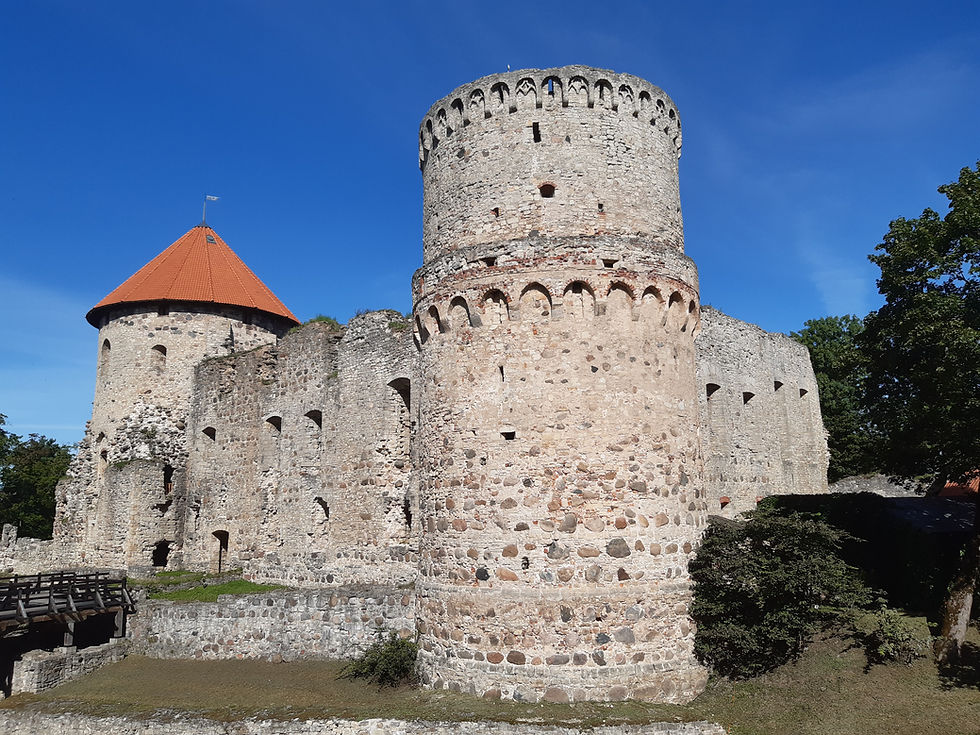
When peaceful conversion failed, crusading warfare intensified. The establishment of the Livonian Brothers of the Sword transformed missionary activity into military conquest. Crusaders destroyed sacred sites, imposed churches, and forced baptism on conquered populations. Yet even after formal conversion, pagan traditions survived beneath the surface. Medieval church records from Livonia frequently complained about superstition, pagan customs, and resistance among the local population. This suggests that Christianisation was a gradual process rather than a sudden transformation.
Lithuania provides the clearest example of long-term pagan survival in the Baltic region. Unlike Livonia and Estonia, Lithuania successfully resisted crusader conquest for centuries and officially converted to Christianity relatively late, in 1387. Historians attribute this endurance to several factors: military success, political organisation, difficult geography, and the adaptability of Lithuanian pagan traditions. Paganism therefore remained a major force in Baltic politics long after the early thirteenth century crusades.
Modern historians increasingly reject older portrayals of Baltic paganism as primitive or chaotic. Although the surviving evidence is limited, research shows that Baltic religious traditions formed complex systems of ritual, mythology, and social identity. Religion shaped political authority, warfare, relations with nature, and community life. The destruction or suppression of these traditions during the Baltic Crusades was therefore not only a religious transformation but also a profound cultural change.
Today, knowledge of pre-Christian Baltic religion survives through archaeology, medieval chronicles, folklore, and comparative studies. While many details remain uncertain, the pagan traditions of the eastern Baltic continue to attract scholarly interest because they represent some of the last indigenous religions in Europe to encounter Christian expansion. The Baltic Crusades were therefore not merely military campaigns but also clashes between fundamentally different religious and cultural worlds.


Comments